
Episode 1 · This Friday
The Wheel's Secret First Job Wasn't Travel
Friday, November 20, 2026 · 3:00 p.m. ET / 12:00 p.m. PT
The wheel's first job had nothing to do with travel.
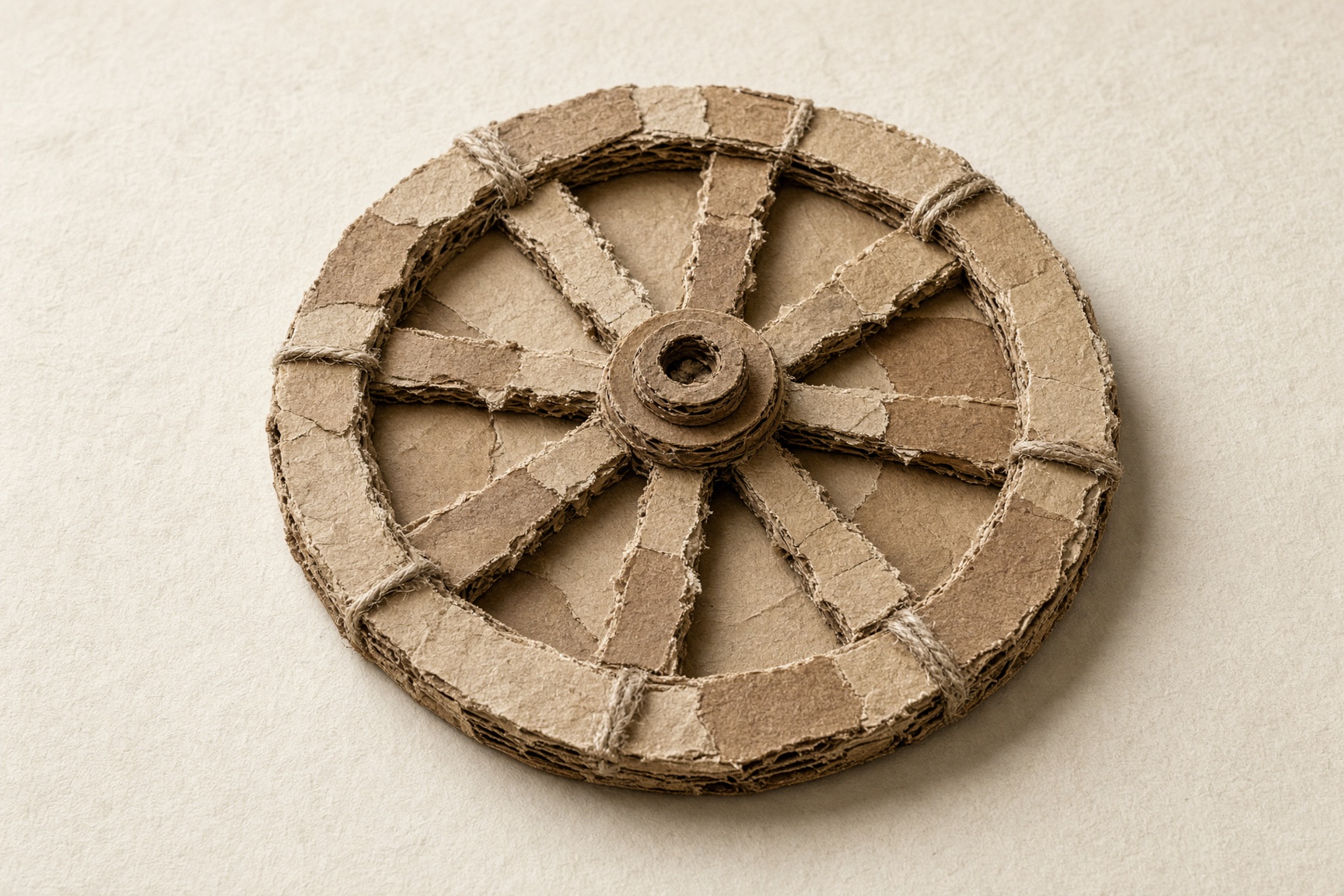
What was the wheel's first job?
The wheel's first job had nothing to do with travel. For centuries, one of the most important wheels on Earth may not have gone anywhere at all. It lay flat in a potter's workshop, spinning clay. And when people finally stood it on its edge and put it under a load, the hardest part wasn't the circle. It was the hole in the middle.
This is the story of how humans invented the wheel, why it took so long, and why some of the greatest civilizations in history decided they could live without it.
Potters in the ancient Middle East found that if they set their clay on a flat disk and turned it while they worked, they could shape their pots faster. Archaeologists in Iran have found slow turntables like this that are more than six thousand years old. Over time they became true potter's wheels, heavy enough to keep spinning under their own momentum.
Many historians think this was the wheel's first real job. Not carrying. Not traveling. Just turning in place. But the order is still debated. The dates for the earliest potter's wheels and the earliest carts overlap, and new finds keep shifting the picture. What we can say is this. By around 3500 B.C., the spinning wheel was at work in Mesopotamia. And at almost the same moment, across a huge stretch of the ancient world, something new began to appear.

Why did it take so long?
Think of everything people managed before the wheel. They sewed with needles, wove cloth, twisted rope, built boats, and played flutes. They farmed, herded animals, and fired pottery. Thousands of years of human ingenuity, and not a single wheel.
That's less strange than it sounds. Most inventions copy something in nature. A forked stick becomes a fork. A gliding bird inspires a wing. But nature has no true wheels to copy. This idea had to come from somewhere else.
Where is the oldest wooden wheel?
In the spring of 2002, a team of Slovenian archaeologists was sampling wood in a drainage ditch in the Ljubljana Marshes. More than five thousand years ago, this was the shore of a lake, and people lived here in houses raised on wooden posts.
At the bottom of the ditch, already damaged by a digging machine, lay a wooden wheel. When the team widened the ditch, they found its axle, preserved in one piece.
The wheel is about twenty-eight inches across, cut from ash wood and held together with strips of oak. The axle is a single length of oak, about four feet long. Radiocarbon tests showed the wheel was roughly 5,100 to 5,350 years old. It's the oldest wooden wheel yet found.
Look closely and you see something odd. The hole in its center is square. The ends of the axle are square too, wedged tight with oak. So the wheel didn't spin around the axle. Wheel and axle turned together, as one piece, a bit like the wheels on a train car.

Who invented it?
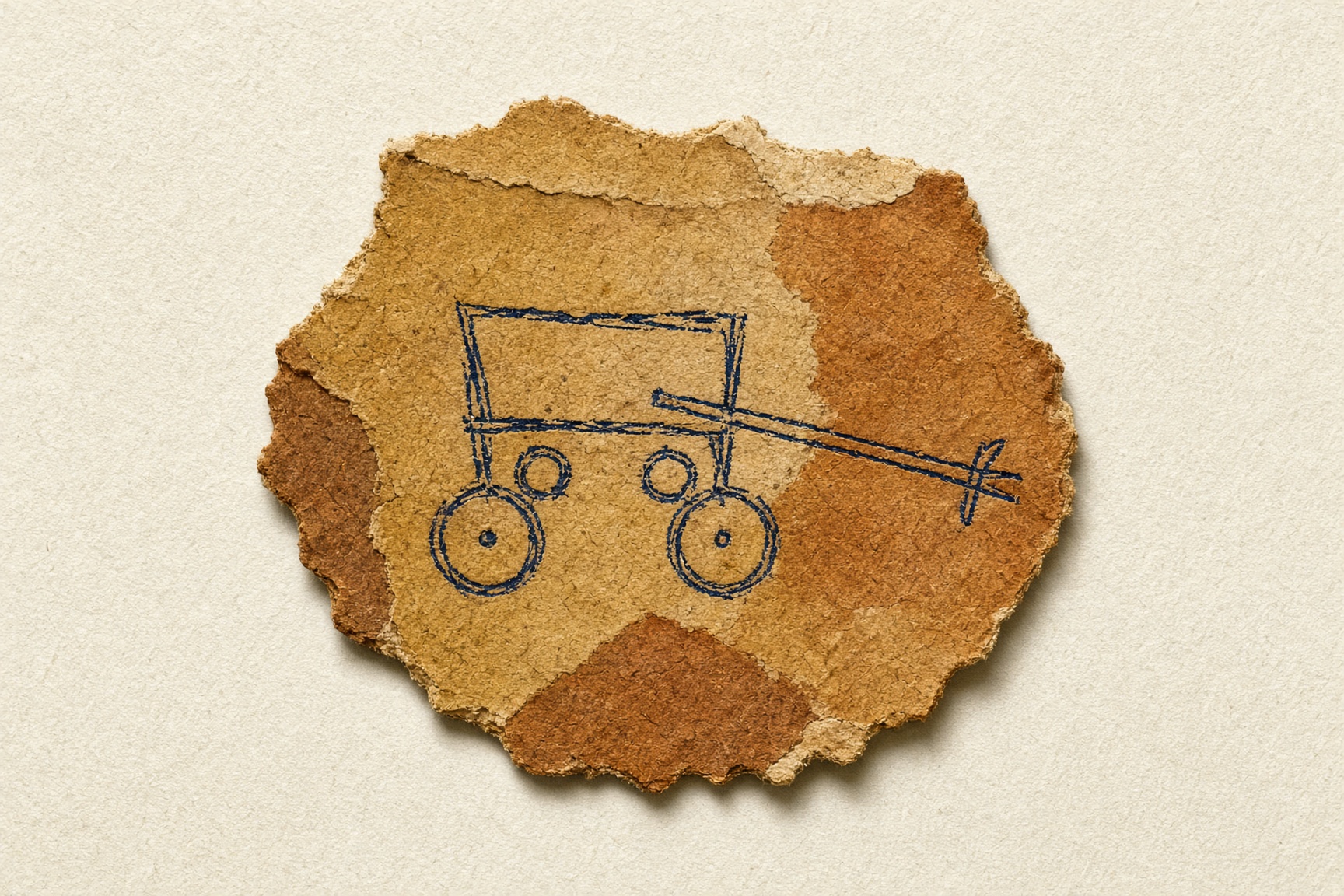
And Slovenia wasn't alone. In southern Poland, at a village called Bronocice, archaeologists dug up a small clay pot scratched with a simple drawing: a box, four wheels, and a pole for pulling. Animal bone from the same pit dates to around 3500 B.C. It's one of the oldest pictures of a wagon anywhere. In northern Germany, at a place called Flintbek, wheel tracks pressed into the ground under a burial mound turned out to be about as old as the Slovenian wheel. And at Uruk, in Mesopotamia, early clay tablets used a little picture of a wheeled vehicle as a written sign.
So who invented it? Honestly, nobody knows. Within a few centuries, wheeled vehicles show up from Mesopotamia to central Europe to the grasslands north of the Black Sea. Some experts think the wheel was invented once and spread fast. Others think it happened in more than one place. One leading expert has said a single new find in a bog could change the answer.
Why is the hole harder than the circle?
So why did it take so long? Rolling is the easy idea. Anyone who has pushed a log downhill has seen it. The hard part is joining something that rolls to something that doesn't.
Drag a heavy load across the ground, and its whole bottom scrapes against the earth with every step. A wheel moves the scraping. The rim rolls over the ground, and the sliding happens in just one small place: where the axle turns inside the hole. Because the axle is so much thinner than the wheel, those surfaces slide only a short distance with each turn. Make the wheel twenty times wider than its axle, and the rubbing parts slide just one-twentieth as far as the load travels.
That's the trick. But it only works if the fit is right. Anthropologist David Anthony, author of The Horse, the Wheel, and Language, explains the problem. The ends of the axle and the hole in the wheel have to be nearly perfectly round and smooth, or friction stops them. The axle has to fit snugly, but not too snugly, or it won't turn. Make it too thick, and there's too much friction. Make it too thin, and it breaks under the load.
Early builders found a clever way out. They made their wagons narrow, so the axles could be short. A short axle can be thin without snapping. Anthony calls the wheel and axle an all-or-nothing machine. Half of one doesn't work at all.
Even with the idea in hand, you needed the right tools. Carving a smooth, round hole in hardwood takes metal. Anthony points out that cast copper chisels and gouges only became common in the Near East after about 4000 B.C. A few centuries later, wheels appear.
Why were the first wheels solid?
Those first wheels were heavy. The oldest known kind was a solid disk, made from three carved planks clamped together by cross pieces. Why not just saw a round slice off a tree trunk? Because a slice cut across the trunk is weaker, thanks to the uneven structure of the wood. Boards cut along the length of the trunk make a better wheel.
These solid wheels were slow and heavy, best suited to oxen. For more than a thousand years, that's what the wheel mostly was: a thick, slow, creaking disk. Then someone figured out how to take most of it away.
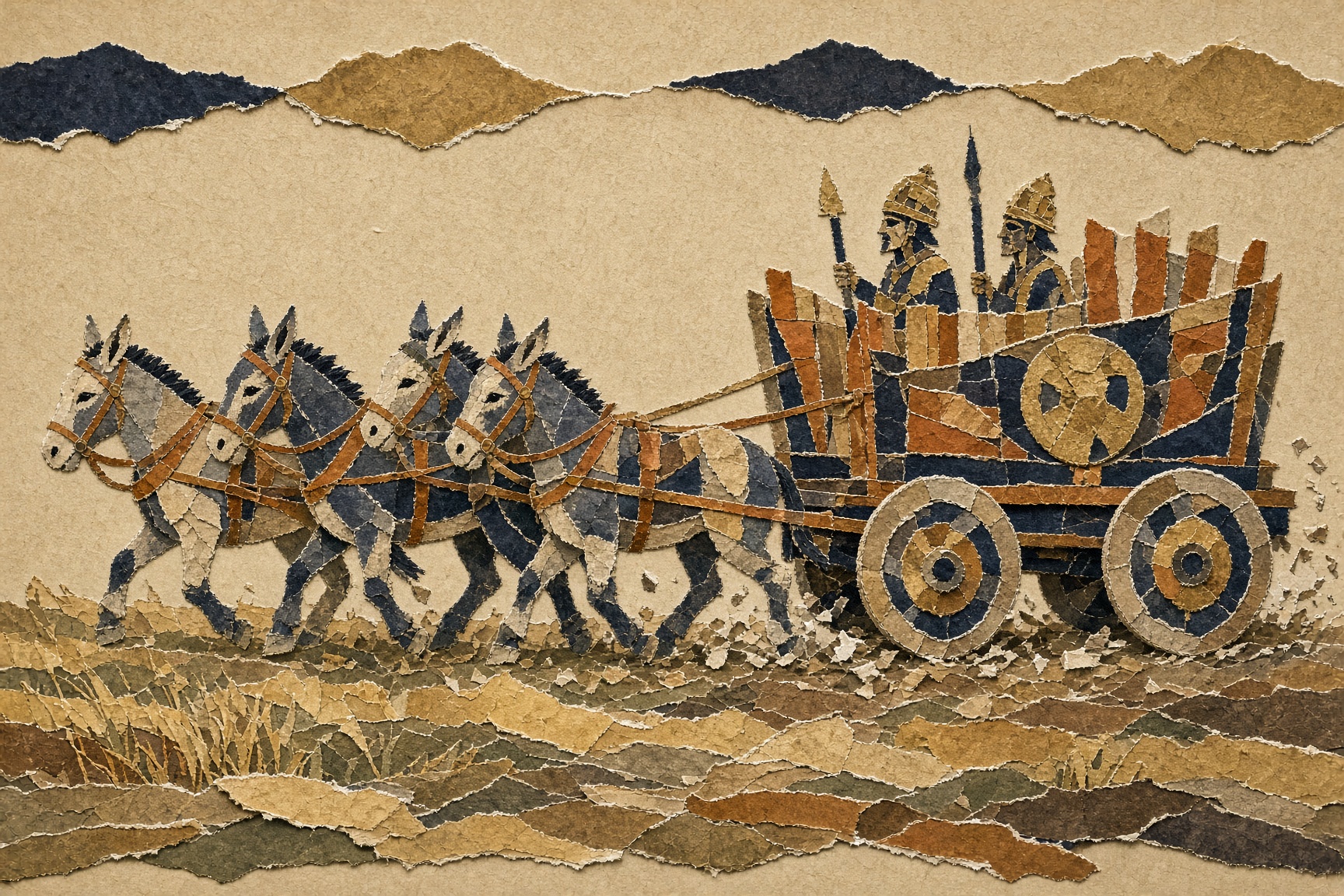
About 4,500 years ago, in the Sumerian city of Ur, someone made a wooden box decorated with shell and lapis lazuli. We call it the Standard of Ur. One side shows an army at war. Four-wheeled wagons roll along, each pulled by four donkey-like animals, probably wild asses called onagers. The wheels are solid. Across the panel, the animals speed up, from a walk to a gallop, trampling enemies underfoot.
It's a war machine, but a clumsy one. Solid wheels are heavy, and heavy wheels are slow.
What did spokes change?
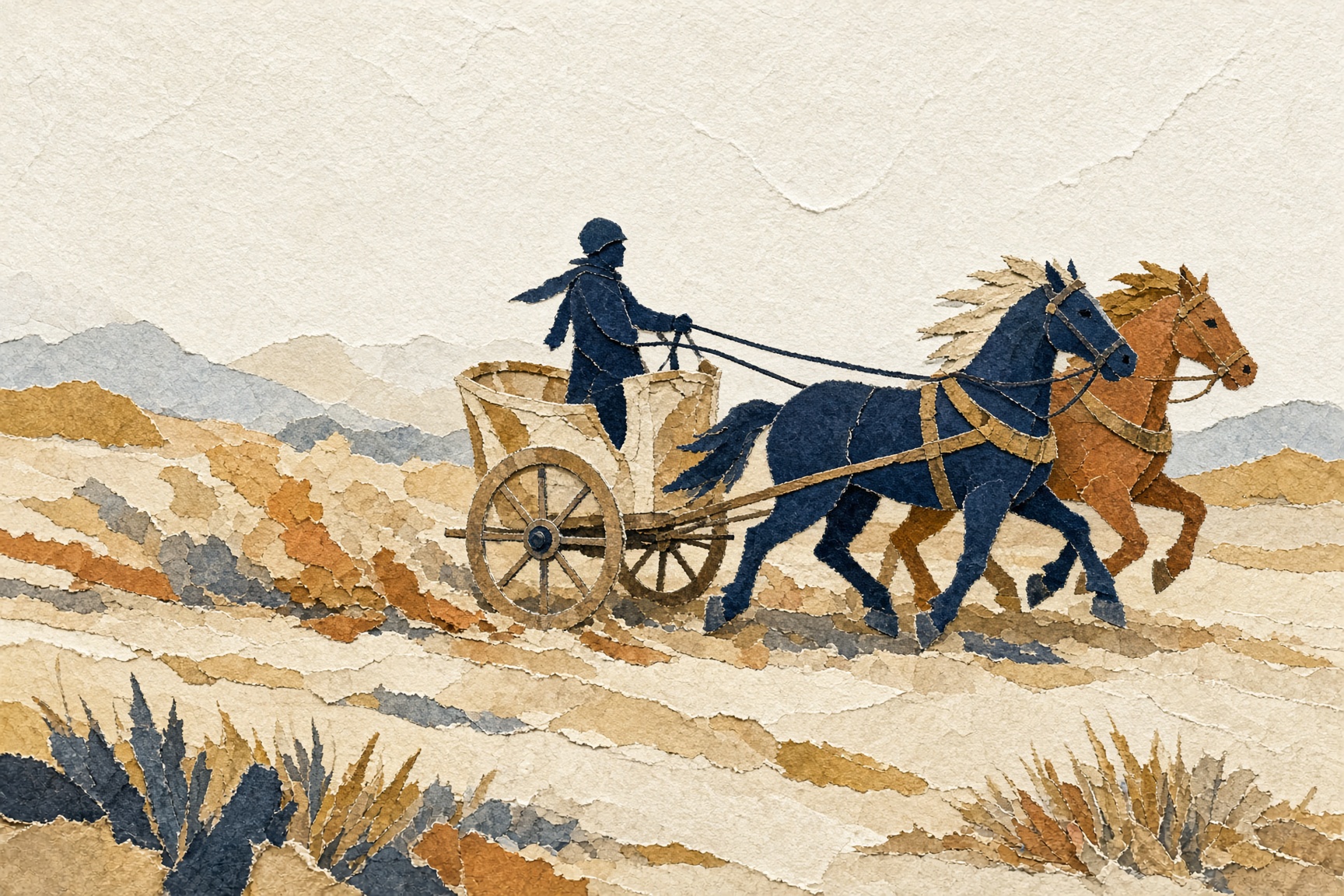
The breakthrough came on the grasslands east of the Ural Mountains, in what is now Russia and Kazakhstan. Around 2000 B.C., people of the Sintashta culture buried important dead with light, two-wheeled vehicles. The wood has mostly rotted away. But in some graves, the wheels left their outline in the soil. And those outlines show spokes.
A spoked wheel keeps only what it needs: a hub, a rim, and a few rods in between. It's far lighter than a solid disk. Pair it with fast, domesticated horses, and you get something completely new. The chariot.
Chariots spread across the ancient world. Egypt, which had largely done without wheeled vehicles for centuries, took up the war chariot around 1600 B.C., probably brought in by the Hyksos, foreign rulers who held the north of the country. When the boy king Tutankhamun was buried, his tomb held six dismantled chariots, all of them on six-spoked wheels.
Later, wheelwrights added a tire of iron. They heated an iron ring, dropped it over the wooden rim, and let it cool. As it cooled, it shrank, and pulled the whole wheel tight. The wooden spoked wheel kept going, without major changes, for thousands of years, until wire spokes and air-filled tires arrived in the 1870s.
Why did Mexico have wheels, but no carts?
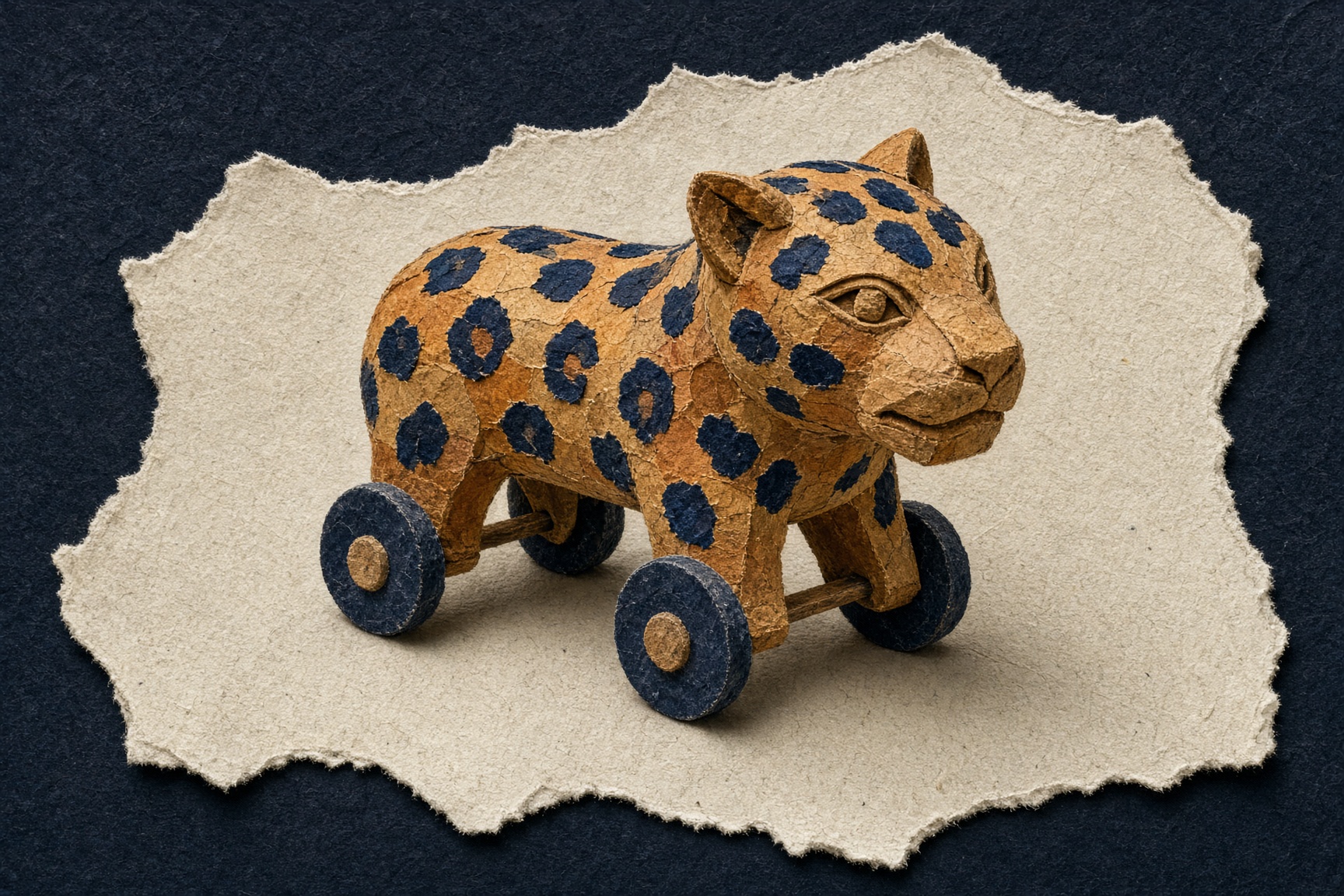
Now let's cross the ocean. In the 1940s, archaeologists working around Veracruz, on Mexico's Gulf Coast, found something that surprised them. Small clay animals with holes through their legs, made to hold axles and wheels. Dogs, jaguars, monkeys, even alligators. Princeton University's art museum has one: a little jaguar whistle on four wheels, made in central Veracruz between about 600 and 900 A.D.
So people in ancient Mexico understood the wheel. They just never put it to work. No carts. No wheelbarrows. No potter's wheels.
Why not? The classic answer is that the Americas had no large animals to pull carts, no oxen and no horses, and that much of the land is rugged. But other scholars push back. People can pull carts themselves, and parts of the region are flat. The Maya even built long, raised stone roads, and still traveled them on foot. Many experts now think these wheeled animals weren't toys at all, but ritual objects, buried with the dead or offered in ceremonies. The honest answer is that we still don't fully know.
Why did the Middle East give the cart up?
And here's the biggest twist. In the Middle East, where wheeled vehicles had rolled for thousands of years, people gave them up.
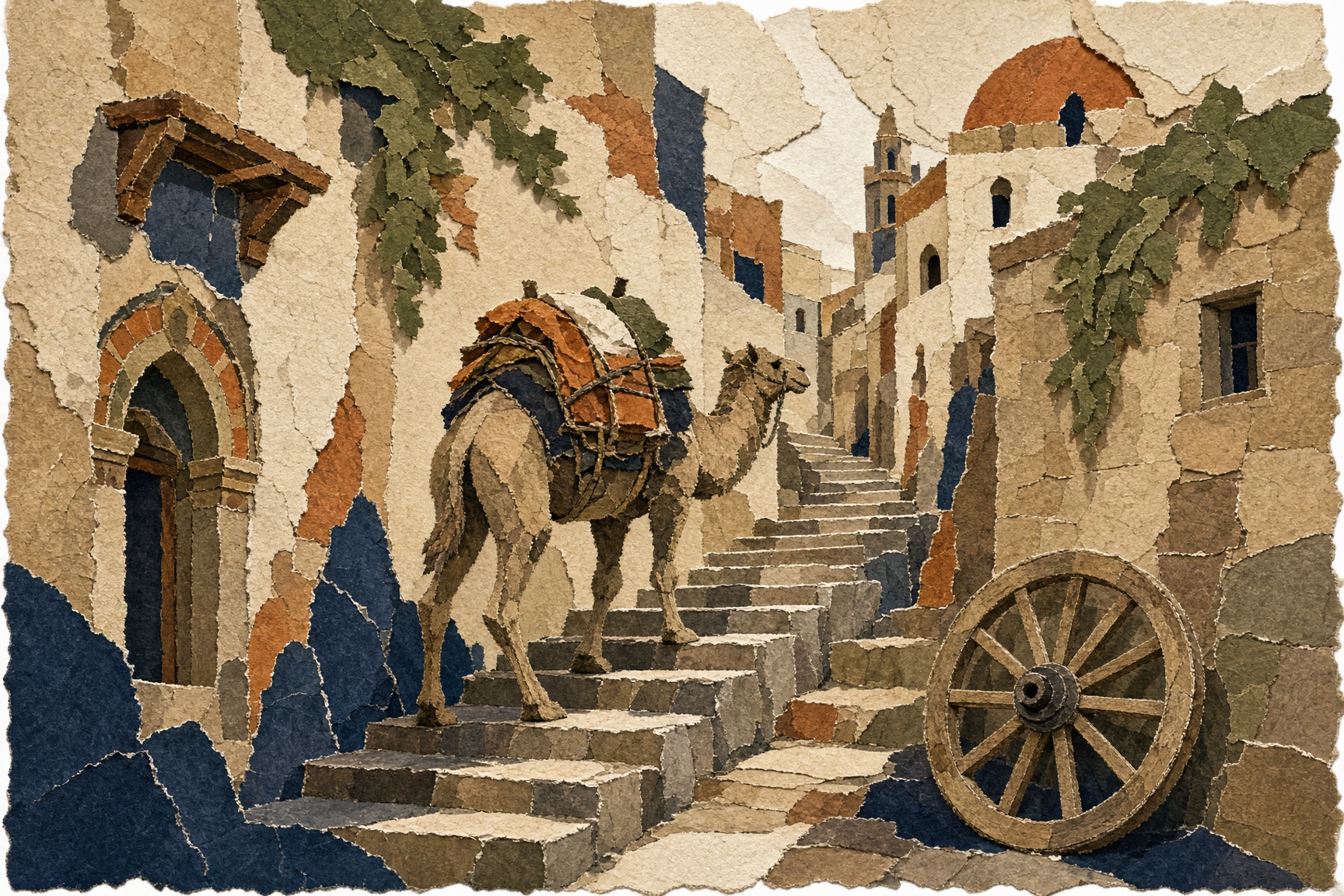
Historian Richard Bulliet traced how it happened. Over roughly the second to the sixth centuries A.D., carts and wagons faded out of much of the Middle East and North Africa. As late as the 1780s, a French traveler named Volney noted that in all of Syria you could not see a single cart or wagon.
They didn't forget the wheel. Potters kept their wheels, and the great waterwheels of Syria kept turning. People simply stopped using wheels to haul things.
The reason, Bulliet argued, was the camel. A pack camel could carry three to five hundred pounds on its back. It ate desert plants that no farm animal wanted. Its saddle needed little wood, in a region short of trees. And nomads did the work of breeding it. Using a price list issued by the Roman emperor Diocletian, Bulliet estimated that camel transport was about twenty percent cheaper than wagons. The camel simply won on cost.
You can still see the result. Bulliet pointed to the old quarters of many cities in the region: narrow, winding lanes, sudden steps, and sharp turns. Streets like that only make sense in a world without carts.
What did the wheel do next?
But the wheel was far from finished. Its next jobs had nothing to do with roads. Wheels lifted water to fields and turned millstones, driven by animals, rivers, and wind. And once wheels began driving other wheels, they needed teeth.
In 1271, an English astronomer named Robertus Anglicus wrote that craftsmen were trying to build a wheel that would turn exactly once a day. They hadn't quite managed it yet. But within a few decades, mechanical clocks were ringing the hours in the towers of Europe.
So how do you teach a wheel to count? How did a ring of tiny teeth, slipping forward one notch at a time, replace the sun and become the way the whole world measures time? That is the next episode.